
A British Energy Security Strategy
 Nick Park
The government has pledged to end imports of Russian oil this year and, writing in the Daily Telegraph this week, the Prime Minister promised to “set out a British Energy Security Strategy - how the UK will become more self-sufficient, and no longer at the mercy of bullies like Putin”.
The new strategy, which is being developed in direct response to Russia’s invasion of Ukraine, could come as early as next week and will likely address questions around the government’s appetite for to new nuclear, for using North Sea reserves and for the electrification of heating and transport. The aim is to ensure the UK is more self-sufficient, and “no longer at the mercy of bullies like Putin”., while ensuring that “green energy of all kinds” remains central to the government’s strategy.
The UK starts from a better place than many of its European neighbours. Pre-pandemic the UK imported around 7% of its gas and 12% of its oil from Russia, figures which both fell in 2020 amid Covid lockdowns. By comparison Germany relies on Russia for around a third of its oil and a third of its gas needs.
It’s being suggested that the strategy, to be published as early as next week, will see Ministers ditching net zero and ripping up their green agenda in favour of a new era for fracking and fossil fuels. While that might mirror David Cameron’s “cut the green crap” comments and please a handful of Tory backbenchers, the reality is likely to be very different. Government is likely to be looking at announcing new measures in the following areas:
Energy efficiency can both reduce demand for imported fuels and cut domestic heating bills. The Conservative manifesto in 2019 pledged £9.2bn for investment in energy efficiency measures (over ten years) to address the fact that the UK has some of the least well insulated homes in Europe. Accelerating that spending could help reduce fossil fuel demand and bring some relief to eligible households before the end of this year. The government may also look to broaden the eligibility criteria for homes to benefit from existing efficiency schemes. Energy efficiency measures have been free for certain households under government schemes for more than 15 years – but to make big progress requires growth in the ‘able-to-pay- market. While energy efficiency measures should make economic sense for households, consumer behaviour to date shows that this is seen as a hassle and not a priority. Higher energy prices, and therefore much shorter payback periods, might see a change in the appetite for private investment in these products.
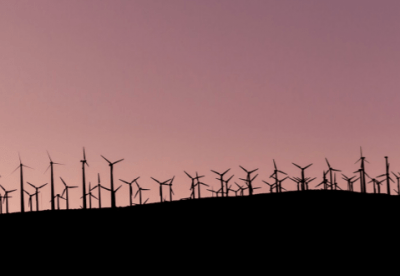
Building out wind and solar further and faster. The Prime Minister has repeatedly boasted about the UK being “the Saudi Arabia of wind” and he has a point. The UK has the second highest installed capacity of offshore wind in the world and under the government’s existing Ten Point Plan aims to quadruple that capacity by the end of the decade. Offshore wind costs in the last round of auctions had essentially reached parity with the cost of existing gas generation. With gas prices being six times higher today, onshore and offshore wind look like a bargain. Wind generators are today paying back subsidies, reducing costs on bills. Minsters have already confirmed the volumes they intend to contract in this year’s CfD auction, so it may be too late to make changes, but government could certainly procure more in the next auction, which it has already brought forward to March 2023. Additional solar power may also be supported, as the Prime Minister mentioned in his article. This could be delivered at pace, with over 300 projects already having planning permission or live planning applications.
Maximising the output from the North Sea in the next few years need not be at odds with the fight on climate. Without wavering on the net zero target, the government is sufficiently pragmatic to understand that the UK will use a lot of oil and gas over the next two decades. The UK has been a net importer of energy since 2004, as output from the North Sea declined. The OGA has found that gas extracted from the UK Continental Shelf has an emissions intensity less than half that of imported Liquefied Natural Gas (LNG) which is the marginal source of supply. Ministers could work with operators to maximise output from existing fields. Small changes to the Wobbe index (a measure of gas quality) could aide increased output. For new projects, there are perhaps 40 licenced fields that have not yet received development consent – Ministers could help these to be brought onstream by indemnifying the owners against the risk these assets become stranded by more stringent policy in the future.
A “series of big new bets on nuclear power” were also promised by the Prime Minister. This may include announcing intent to extend the life of the Sizewell B power station that opened in 1995, but that was pretty much baked in anyway. And promoting new build – both large-scale and small-modular – may be positive over the long term, but is unlikely to lead to any new generation being online in this decade.
Finally, government could seek to speed up the electrification of heating and transport. Electric vehicles (including all types of hybrid) already account for almost half of new car sales, and sales of pure battery vehicles were up by 76% last year. Investing in charging infrastructure would help more families to consider an electric car for their next purchase. At today’s gas prices, domestic heat pumps are a cheaper way to heat homes than traditional gas boilers. The government aims to go from installing 35,000 heat pumps a year to having capacity for 600,000 per year by 2028. Increasing the rate at which engineers are trained to install heat pumps would be just one way to speed this up.
For homes and businesses struggling with high energy costs, these announcements will be welcome, but they should not expect any significant impact on bills in the short term. But it may turn out that the urgent aim to reduce the cash we send to Putin’s Russia ends up having positive long-term outcomes for UK energy security and for the environment.